
Building Leadership Skills
Leaders Aren't Born Knowing How. Your Child Can Learn to Lead.
Help your child take initiative, include others, own their responsibilities, and bring people together around a goal.
- 4Core Modules
- 28Lessons & Exercises
- 12Developmental Subskills
- 2Learning Programs
Why Does Leading Feel So Hard for Your Child?
They hang back in group projects, take over completely, or panic when the team falls apart. Often it isn't personality. Leadership takes skills still developing.
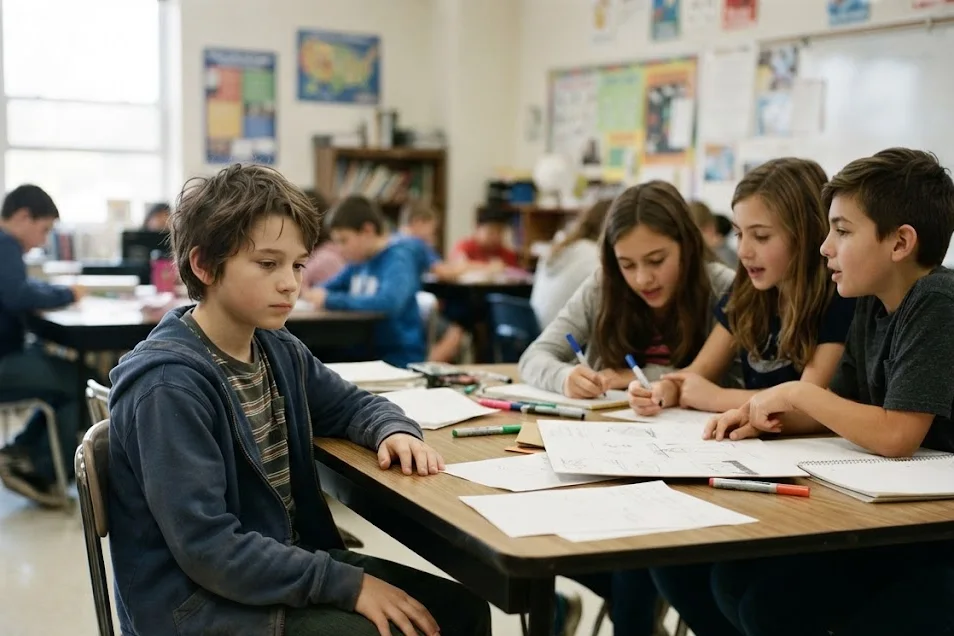 Holding Back
Waiting for Someone Else
- They have ideas but don't speak up.
- Leading feels like something for other kids.
- Responsibility seems risky or uncomfortable.
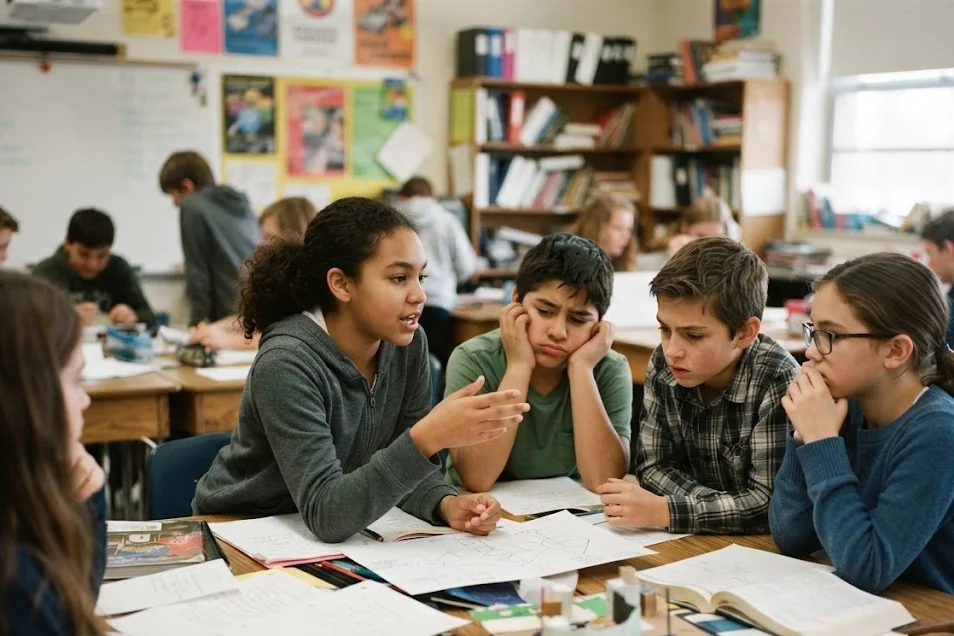 Taking Over
Doing It All Their Way
- Leading turns into telling everyone what to do.
- Others stop contributing and the group splits.
- Listening feels slower than deciding alone.
 When Things Go Wrong
Blame and Burnout
- Plans change and they don't know how to adjust.
- It's easier to blame others than own the result.
- Too much responsibility leads to stress.
Leadership isn't a trait only some children are born with. It can be learned, practiced, and grown in everyday moments.
Why Leadership Matters More as They Grow
As children grow, more of their school, sports, and community life happens in groups. How they lead and follow shapes what those groups can do.
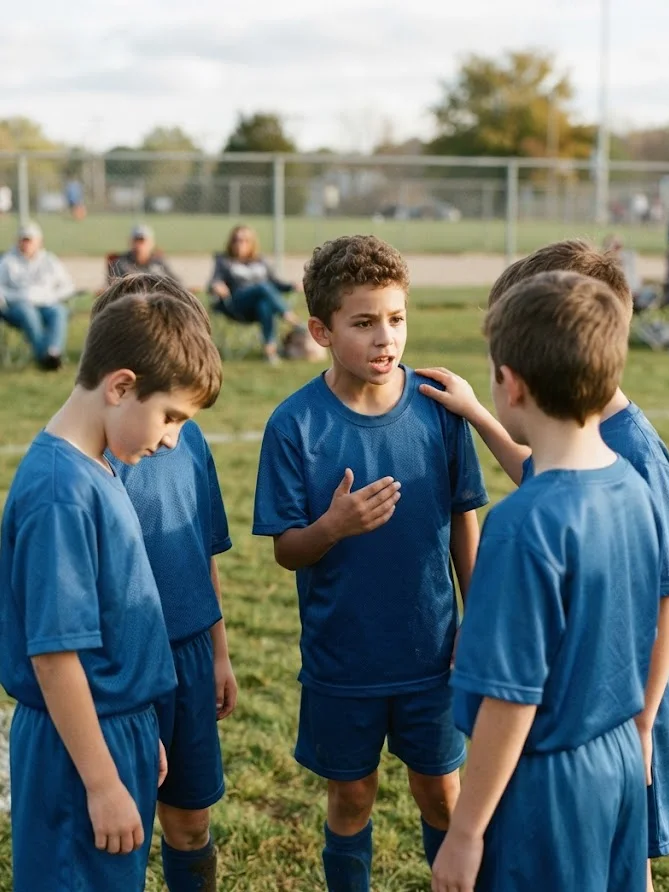
More of Life Happens in Groups
- Group work is everywhere. Projects, teams, and clubs need children who can organize, include, and motivate others.
- Responsibility grows. Older children are trusted with more, and owning their results builds that trust.
- Plans change. Adaptable leaders help a group keep moving when things don't go as expected.
- Everyone can lead. Leadership includes listening, encouraging, and following well, not just being in charge.
- Leadership isn't being bossy. Strong leaders make others feel heard and safe to contribute their ideas.
The goal isn't a child who always leads. It's one who knows how to lead, follow, and bring out the best in a group.
What Building Leadership Skills Helps Your Child Develop
Leadership isn't one quality. The course breaks it into specific capabilities children can understand, practice, and strengthen over time.
Growing as a Leader
Develop qualities like dedication, flexibility, and confident communication that others want to follow.
Making Others Feel Included
Be approachable and inclusive so others feel safe to speak up and contribute.
Owning the Results
Take responsibility for tasks and outcomes, even when things go wrong.
Knowing Different Ways to Lead
Recognize different leadership styles and choose the right one for the situation.
Following and Influencing Well
Listen, follow when it makes sense, and influence others through respect.
Each capability supports the others: including others, owning results, and listening well help children lead in a way people want to follow.
Inside the Course — Four Modules, From Essentials to Real Leadership
The course starts with what makes a leader, builds the path to leadership, develops communication and collaboration, and ends with goals and solutions.
- 01
Leadership Essentials
What effective leaders do and how they lead.
- Identify the qualities that define effective leaders.
- Learn different leadership styles and when each fits.
- Reflect on their own leadership experiences and growth areas.
- Understand how leading and following, listening and guiding, connect.
- 02
Pathway to Leadership
Diligence, adaptability, and avoiding burnout.
- Appreciate how diligence and organization support leadership goals.
- Develop key leadership traits and how they shape a team.
- Stay flexible and adaptable when circumstances change.
- Use mindfulness to manage leadership stress and prevent burnout.
- 03
Communication and Collaboration
Being someone others trust and want to work with.
- Be approachable and inclusive so others trust them.
- Develop active listening and responsive communication.
- Create an environment where everyone feels heard and valued.
- Use communication strategies that help teams reach shared goals.
- 04
Goals and Solutions
Accountability, goals, and a solutions mindset.
- Understand what accountability means for a leader.
- Use goal-setting to lead with purpose and track progress.
- Approach challenges with a solutions-oriented mindset.
- Practice leadership in real-world scenarios and decisions.
Course structure
- 4Modules
- 24Instructional Lessons
- 7Practice Activities
 Course badgeEmber Ant — The Organizer
Together, the modules move children from understanding leadership to practicing it, with others and with a clear purpose.
From Learning to Real Life — How Your Child Practices Leadership
Knowing what good leaders do is easier than doing it when the group project stalls. Leadership grows through practice, reflection, and real teams.
 01Learn
Understand What Leaders Do
- Watch short animated lessons about everyday leadership.
- See characters lead, listen, and handle setbacks.
- Discover leadership styles, accountability, and goal-setting tools.
 02Practice & Reflect
Think Through the Situation
- Work through scenario-based Try Its where available.
- Choose which leadership style fits a situation.
- Reflect on their own leadership in module exercises.
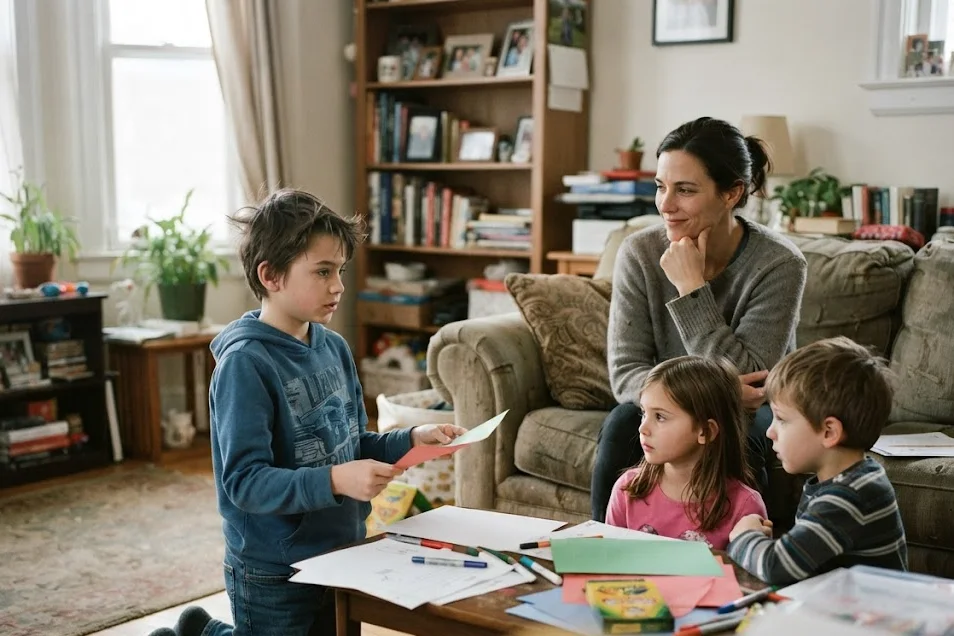 03Apply
Lead Beyond the Screen
- Ask every group member for an idea.
- Take responsibility for one task and follow through.
- Suggest a solution when the group gets stuck.
- Talk with a parent about a time they helped a team.
Success isn't being in charge. It's helping a group do its best, and learning from every team they're part of.
What Research Tells Us About Leadership, Motivation & Teams
Researchers have studied where leadership comes from and what helps groups work well. These findings describe general patterns, not predictions for any individual child.
- Roots in Childhood
Motivation to lead starts early.
- A study followed children from age 1 into adulthood.
- Enjoying learning in childhood was linked to wanting to lead as adults.
- These are associations from one long-term study.
- Everyone Gets a Turn
Groups do better when all voices count.
- In studies of 699 people, some groups performed well across many tasks.
- Those groups shared conversation more equally and read each other well.
- The participants were adults.
- Safe to Speak Up
Inclusive teams learn more.
- A study of 51 work teams measured whether members felt safe to speak up.
- Teams that felt safe showed more learning and better performance.
- Team leader coaching helped shape that feeling of safety.
The evidence points to inclusion: strong groups give everyone a voice, and leaders help create that safety. Building Leadership Skills is built around that approach, without promising guaranteed results.
How Building Leadership Skills Supports Two Learning Journeys
The course appears in two programs. In each, it arrives at a different point and builds on different courses that came before it.
Why It Belongs in Both
- In Leadership Development, it gives voice to action. After Communication Foundations, children use clear communication to take initiative and guide others.
- In Leadership Development, it prepares for trust. Leading well sets up Relationship Building Basics, where children learn that influence depends on trust.
- In Strength, it turns strength outward. After Conflict Resolution Foundations, children apply confidence and fairness to leading a group.
- In Strength, it leads into creating. Initiative and responsibility prepare children for Don't Wait: Create!, the program's final course.
The Leadership Development ProgramCourse 3 of 7
- 1–2Two Earlier CoursesConfidence · Communication
- 3This CourseBuilding Leadership SkillsInitiative & Responsibility
- 4Relationship Building BasicsTrust & Connection
- 5–7Three Later CoursesChoices · Conflict · Teamwork
The Strength ProgramCourse 6 of 7
- 1–4Four Earlier CoursesConfidence · Courage · Resilience · Social Awareness
- 5Conflict Resolution FoundationsNavigating Disagreements
- 6This CourseBuilding Leadership SkillsLeadership & Initiative
- 7Don't Wait: Create!Creativity & Personal Agency
In either program, the course isn't a standalone fix. It's one step in a longer sequence that gives leadership time to develop.
Frequently Asked Questions About Building Leadership Skills
Practical answers about what your child will learn, what the course asks of your family, and how it fits into Bloomster's programs.
Who is Building Leadership Skills designed for?
It uses everyday situations relevant to children roughly 9 to 14. It is the third course in the Leadership Development Program, which works for children from 9 to 14, and the sixth in the Strength Program, designed around ages 11–13. What your child is experiencing matters more than an exact age.
What will my child learn in this course?
Children learn the qualities of effective leaders, different leadership styles, and how leading and following connect. They practice diligence, adaptability, inclusive communication, active listening, accountability, goal-setting, and solutions-focused thinking.
My child is shy. Is this course right for them?
Yes. The course treats leadership as more than being loud or in charge. Listening, including others, and following through are leadership too. Quiet children often become thoughtful leaders when they learn these skills.
How long does the course take?
Your child moves at their own pace. The four modules contain 24 short animated lessons, 7 practice activities, and a module exercise at the end of each. Inside a program, courses are spaced across roughly a year, which gives this one several weeks to settle into daily life.
How much time should my child spend on it each week?
We suggest two 30-minute learning sessions each week. Group projects, teams, and family tasks between sessions give your child real chances to practice. If a week gets missed, simply pick up again.
Do I need to be involved as a parent?
You don't need to teach the course. Protect the learning time, notice what your child is working on, and give them small leadership roles at home, like planning a family outing. Bloom, the parent side of Bloomster, helps you follow along.
My child tends to be bossy. Will this help?
It can. The course emphasizes inclusive, approachable leadership, active listening, and knowing when to follow. Children learn that strong leaders make others feel heard, not just told what to do.
Does the course cover stress from responsibility?
Yes. Module 2 includes mindful leadership, helping children manage the stress that comes with responsibility and avoid burnout. Leading well includes taking care of themselves.
Can I enroll my child in this course by itself?
Bloomster is organized around learning journeys rather than single-course purchases. Building Leadership Skills is part of the Leadership Development and Strength programs, and it may also be recommended within a Personalized Course Journey. Finding your start shows where your child might begin.
How will I know whether my child is making progress?
Look for small signs: volunteering for a role, asking others for their ideas, owning a mistake, or suggesting a solution when a group gets stuck. Progress is rarely a straight line.
Explore the Leadership Development and Strength Programs — See the Bigger Journey
Leadership is one capability among many. Both programs connect it with confidence, communication, relationships, and creative action.
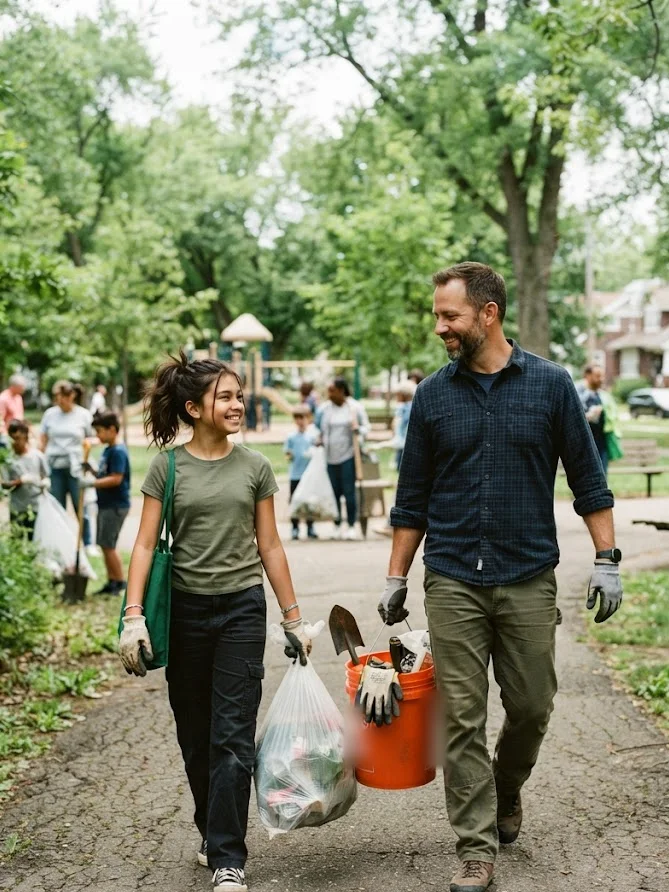
Leadership Grows Alongside Other Skills
- This course builds initiative, inclusion, accountability, and teamwork.
- Earlier courses develop the confidence and communication leadership draws on.
- Later courses apply leadership to trust, integrity, teamwork, and creating.
- Steady practice across months gives these capabilities time to connect in everyday life.
Explore how each program sequences its seven courses, and which journey fits what your child needs right now.
 Free PDF · No account neededFree Leadership Guide for ParentsReal-life scenarios and questions to talk through leadership with your child at home.
Leadership isn't about being the boss. It's about your child helping others do their best, and owning their part.