
Focused You: Manage Your Mind & Energy
Your Child Can't Control Every Distraction. But They Can Learn to Manage Their Attention.
Help your child understand what affects their focus, manage their mental energy, and build habits that support greater independence.

- 4Core Modules
- 32Lessons & Exercises
- 12Developmental Subskills
- 2Learning Programs
Why Is It So Hard for Your Child to Stay Focused?
You ask them to finish their homework. Twenty minutes later, they've checked their phone, wandered into another room, or started three things without completing one. It can look like a lack of effort. But staying focused involves capabilities children are still developing.
 Distractions Everywhere
Their Attention Is Constantly Competing
- Devices, messages, noise, and conversations compete with schoolwork.
- Switching between activities can make it harder to stay engaged.
- Children may not recognize how often their attention shifts.
 Mental Energy Changes
Focus Isn't Unlimited
- Concentration can be harder when children are tired, stressed, or overwhelmed.
- Their ability to focus changes throughout the day.
- They may keep pushing without recognizing when they need a break or a different approach.
 Self-Management Is Developing
Knowing What to Do Isn't Always Enough
- Getting started, organizing work, and staying on task require practice.
- Good intentions don't automatically produce consistent habits.
- Children often still depend on reminders to get themselves back on track.
Before children can manage their attention more independently, they need opportunities to understand how their attention works.
Why Attention & Mental Energy Matter More Than Ever
As your child's responsibilities grow, so do the demands on their attention. Schoolwork gets more complex, schedules get busier, and digital distractions get harder to ignore. Managing their own focus becomes increasingly important.

The Demands Are Changing
- School requires more independence. Longer assignments, projects, and deadlines require planning and sustained attention.
- Distractions are increasingly personal. Phones, group chats, games, and online content compete for attention even when adults aren't nearby.
- Mental energy affects decisions. Tiredness, frustration, and emotional overload can make it harder to concentrate and respond thoughtfully.
- Independence requires self-direction. As children grow, they need to decide when to begin, what to prioritize, and how to get themselves back on track.
- These skills matter beyond academics. Listening, following through, being present with others, and managing competing responsibilities also depend on attention.
Your child won't always have someone beside them saying, "Pay attention." The more meaningful goal is helping them learn how to guide their own attention.
What Focused You: Manage Your Mind & Energy Helps Your Child Develop
Focused You: Manage Your Mind & Energy introduces practical capabilities that help children understand distractions, manage their mental energy, and develop more intentional habits. These are not personality traits a child either has or lacks. They are skills that can be developed through learning and practice.
Recognizing Distractions
Notice what pulls their attention away and identify the conditions that make concentration difficult.
Managing Mental Energy
Recognize changes in energy and use appropriate pauses, movement, or grounding strategies.
Building Focus-Friendly Routines
Develop practical habits and structures that make getting started and staying engaged easier.
Directing Attention Intentionally
Practice single-tasking, setting focus goals, and returning attention to what matters.
Getting Back on Track
Respond more constructively to interruptions, setbacks, and moments when concentration slips.
These capabilities work together: noticing distractions, managing energy, creating supportive routines, and returning to a task when attention wanders.
Inside the Course — Four Modules, One Connected Learning Journey
Focused You: Manage Your Mind & Energy follows a deliberate progression. Children first understand how attention works, then explore concentration strategies, learn to manage their energy, and finally bring those ideas together into everyday habits.
- 01
Discovering How Your Mind Focuses
Understand what helps and hurts attention.
- Explore how attention works and why distractions happen.
- Recognize personal focus challenges and environmental influences.
- Understand the relationship between concentration and mental fatigue.
- Discover practical strategies for reducing distractions.
- 02
Building Your Concentration Skills
Develop tools that make focused work easier.
- Practice mindfulness and attention-management techniques.
- Create focus-friendly environments.
- Use goals, checklists, and time-management strategies.
- Explore single-tasking and more constructive thinking patterns.
- 03
Managing Energy Levels
Understand when to push forward and when to reset.
- Recognize how energy levels influence attention.
- Explore movement, pauses, and grounding techniques.
- Practice responding to overwhelm without immediately reacting.
- Learn strategies for making more intentional choices.
- 04
Focus Friendly Habits
Turn useful strategies into everyday routines.
- Build routines that support concentration and follow-through.
- Explore healthier boundaries around technology.
- Create practical focus plans and adjust them when needed.
- Learn when and how to ask for support.
Course structure
- 4Modules
- 28Instructional Lessons
- 8Practice Activities
 Course badgeFalcon — The Tracker
Each module builds on what came before, helping children move from understanding attention to practicing strategies they can use independently.
From Learning to Real Life — How Your Child Practices These Skills
Understanding focus is one thing. Using that understanding when homework feels overwhelming, notifications keep arriving, or concentration starts slipping is another. Focused You: Manage Your Mind & Energy connects learning with everyday situations so children can practice making more intentional choices.
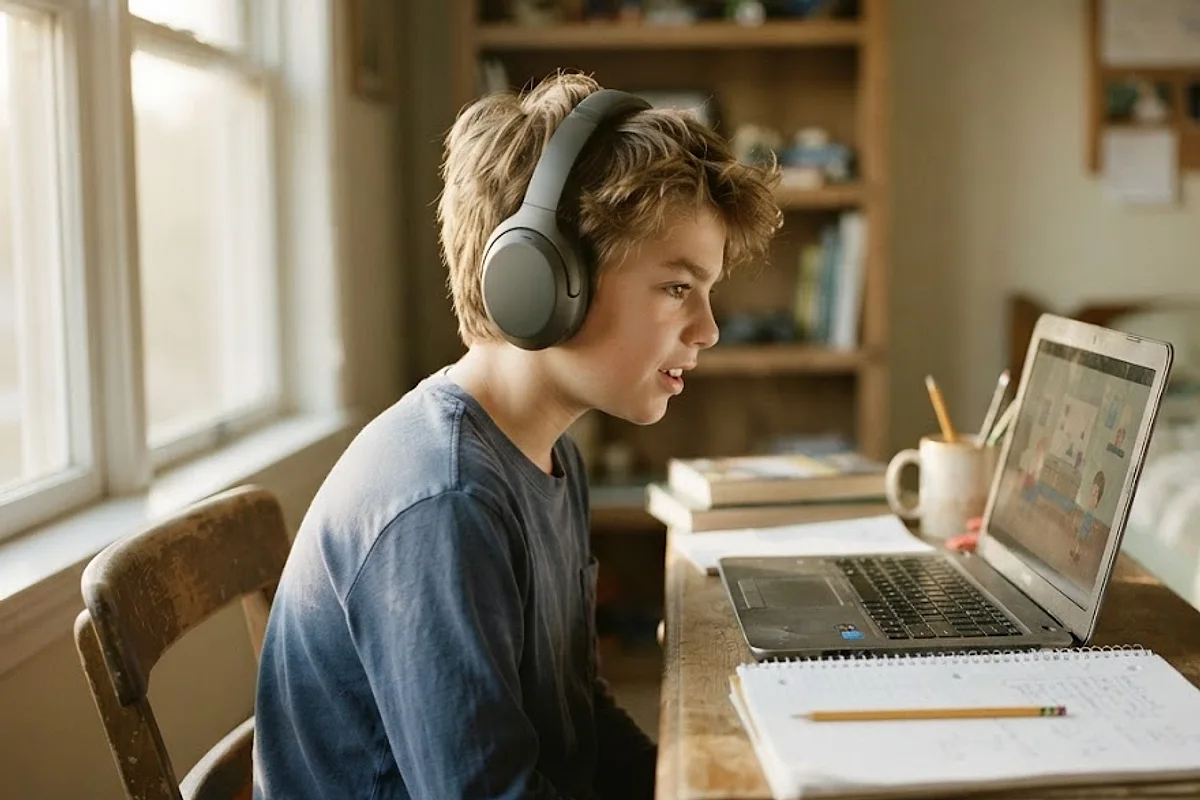 01Learn
Understand What Is Happening
- Watch short, accessible lessons.
- Explore relatable examples involving focus, routines, energy, and distractions.
- Discover techniques that may help in similar situations.
 02Practice & Reflect
Think Through Their Choices
- Work through scenario-based Try Its where available.
- Consider different responses to distractions and competing priorities.
- Reflect on personal challenges in module exercises.
- Identify strategies that may be useful in their own lives.
 03Apply
Use the Learning Beyond the Screen
- Try a focus strategy during homework or another important activity.
- Practice creating environments and routines that support attention.
- Recognize when a break or reset could help.
- Discuss practical ideas with a parent and revisit them as needed.
Success isn't remembering every tip. It's beginning to recognize moments when a different choice could help—and having something useful to try.
What Research Tells Us About Focus, Attention & Self-Regulation
The ability to focus, plan, resist distractions, and manage impulses is part of a broader set of developing executive-function and self-regulation skills. Research supports giving children opportunities to practice these capabilities—not simply expecting them to appear with age.
- Focus Is a Developing Capability
Attention and self-management develop over time.
- Executive-function skills help children filter distractions, hold goals in mind, and regulate responses.
- Children develop these abilities through experience, supportive environments, and practice.
- Different children may need different levels of support.
- Practice Matters
Knowing a strategy is different from using it.
- Setting goals, organizing tasks, and monitoring progress give young people ways to exercise self-regulation.
- Repeated opportunities to reflect and adjust support development.
- Adults can gradually shift responsibility as children become more capable.
- The Environment Matters
Focus doesn't depend on willpower alone.
- Technology notifications and competing media can make sustained attention more difficult.
- Intentional device routines and thoughtful media boundaries can reduce avoidable distractions.
- Families can build these habits together rather than relying only on rules after problems arise.
The research points toward an important principle: children benefit from guidance, practice, and environments that support the development of attention and self-management. Focused You: Manage Your Mind & Energy is designed around those principles, without promising instant or guaranteed results.
Why Focused You: Manage Your Mind & Energy Is Part of the Habits Program
Focused You: Manage Your Mind & Energy is the first course in the Habits Program because managing attention provides a practical starting point for managing behavior, effort, and everyday responsibilities. Children begin by understanding what affects their focus before exploring increasingly complex habits and choices.
Why We Begin Here
- Attention comes before intentional action. Recognizing distractions can help children notice when something is pulling them away from a goal.
- Awareness supports impulse control. Learning to notice urges and pauses prepares children for the next course, Mastering Impulse Control.
- Focus supports learning and motivation. Children can begin exploring how to direct effort toward activities that matter to them.
- Routines create a foundation for discipline. Focus-friendly habits introduce structure before children work more deeply on self-discipline.
- These skills support thinking and teamwork. Listening, considering information, and staying engaged are useful when solving problems and working with others.
- In Academic Success, it comes second. There it follows Exploring You: A Journey to Self-Awareness, so children apply what they learned about their own patterns to managing attention.
The Habits ProgramCourse 1 of 7
- 101 — Start HereFocused You: Manage Your Mind & EnergyAttention & Focus
- 2Mastering Impulse ControlSelf-Regulation
- 3Learning to Love Learning!Curiosity & Motivation
- 4–7Four Later CoursesDiscipline · Thinking · Teamwork · Forgiveness
The Academic Success ProgramCourse 2 of 7
- 1Exploring You: A Journey to Self-AwarenessSelf-Awareness & Learning Patterns
- 2This CourseFocused You: Manage Your Mind & EnergyAttention & Mental Energy
- 3Emotional You: Managing Your EmotionsEmotional Regulation
- 4–7Four Later CoursesConfidence · Goals · Discipline · Problem-Solving
Focused You: Manage Your Mind & Energy is not intended to solve every challenge involving attention. It gives children a starting foundation that the rest of the Habits Program can build upon.
Frequently Asked Questions About Focused You: Manage Your Mind & Energy
Choosing the right learning experience means understanding what your child will learn, what it requires from your family, and how it fits into everyday life.
What age is Focused You: Manage Your Mind & Energy designed for?
Focused You: Manage Your Mind & Energy uses everyday situations that are relevant to children roughly 9 to 14. It is the first course in the Habits Program, designed around ages 10–12, and it is also part of the Academic Success Program, which works for children from 9 to 14. Age is a guide; what your child is experiencing matters more.
How long does the Focused You: Manage Your Mind & Energy course take?
There is no fixed deadline. Focused You: Manage Your Mind & Energy has four modules with 28 short instructional lessons, 8 practice activities, and 4 module exercises. Within a program, seven courses are spread across an approximately year-long journey, so each course is given several weeks. Pacing varies from child to child.
How much time should my child spend on it each week?
We recommend two 30-minute learning sessions each week. A steady rhythm matters more than long sessions, because focus habits develop through repetition. Busy weeks, school breaks, and holidays are normal; your child can simply pick up where they left off without rushing to catch up.
Do I need to participate as a parent?
You don't need to teach the course or sit through every lesson. Your role is to protect the learning time, stay aware of what your child is learning, and help connect it to everyday moments like homework or screen time. Bloom, the parent side of Bloomster, helps you follow along.
Does this course help with homework and studying?
It is designed to support the habits behind homework. Children learn to notice what pulls their attention away, set up a focus-friendly space, use goals and checklists, and get back on track after interruptions. Focused You: Manage Your Mind & Energy does not teach school subjects, and how much it helps will vary from child to child.
What if my child struggles significantly with attention?
Focused You: Manage Your Mind & Energy is an educational course about everyday focus habits. It is not a diagnosis or a treatment for ADHD or any other condition. If attention difficulties are persistent or affect school, friendships, or daily life, talk with your pediatrician or a qualified professional. Some families use Bloomster alongside that support.
What will my child actually do in the course?
Your child watches short animated lessons built around relatable situations, works through scenario-based Try Its where available, and completes a reflection exercise at the end of each module. Along the way, they choose strategies, like a focus plan or a quick reset, to try at home and at school.
Can I enroll my child in Focused You: Manage Your Mind & Energy by itself?
Bloomster is built around learning journeys rather than single-course purchases. Focused You: Manage Your Mind & Energy is part of the Habits and Academic Success programs, and it can also be recommended as a starting point in a Personalized Course Journey. When you find your start, we suggest where your child might begin.
How will I know whether my child is making progress?
Look for small, ordinary changes rather than perfect concentration: noticing when they are distracted, returning to a task with fewer reminders, taking a break before becoming overwhelmed, or setting up their space before starting. Conversations at home will tell you which strategies are sticking.
You don't need to have every answer before beginning. What matters is understanding whether this kind of intentional learning fits your child's needs and your family's priorities.
Explore the Habits Program — See the Bigger Learning Journey
Focused You: Manage Your Mind & Energy is one part of a broader effort to help children develop greater independence in how they think, learn, respond, and follow through. The Habits Program brings together seven connected courses so these capabilities can be developed with greater structure and continuity.

One Course Is a Beginning. The Journey Goes Further.
- Begin with understanding attention and mental energy.
- Build on that foundation through impulse control, motivation, and self-discipline.
- Develop more thoughtful approaches to reasoning and working with others.
- Give these capabilities time to connect through practice and everyday experience.
Explore how the seven courses fit together, why they appear in this sequence, and what the Habits Program could mean for your child's development.
 Free PDF · No account neededFree Self-Management Guide for ParentsReal-life scenarios and questions to talk through focus, impulses, and self-management with your child.
The goal is not simply to help your child focus today. It's to help them become increasingly capable of directing their own attention, decisions, and actions as they grow.